
Audio Restoration + Forensics
-
Archival restoration focuses on fidelity and heritage. It involves taking analog or aging digital media and cleaning it for future generations or commercial re-release (e.g., music albums, historical speeches).
The Transfer Process: High-quality conversion from physical media (Vinyl, Cassettes, Reel-to-Reel) into a high-resolution digital format. (May be outsourced depending on required tools)
Cleanup Focus:
Mechanical Artifacts: Removing clicks, pops, and crackle from vinyl or surface noise from wax cylinders.
Electrical Interference: Filtering out 60Hz hum or electromagnetic buzz.
Source Correction: Compensating for "tape hiss" or speed fluctuations (wow and flutter).
Common Source Media:
Magnetic Tape: Cassettes and professional Reel-to-Reel (various speeds).
Discs: Vinyl (33 1/3, 45, 78 RPM), VHS movies, and CDs.
-
The primary goal of forensic restoration is intelligibility and admissibility. It is used to prepare audio for legal proceedings, ensuring that voices are clear enough for a jury or investigator to understand.
Objective Neutrality: To maintain "chain of custody" and prevent bias, forensic engineers often avoid learning about the case details or the specific meaning of the words. They focus on the signal, not the story.
Key Techniques:
Intelligibility Enhancement: Boosting the specific frequency ranges of the human voice.
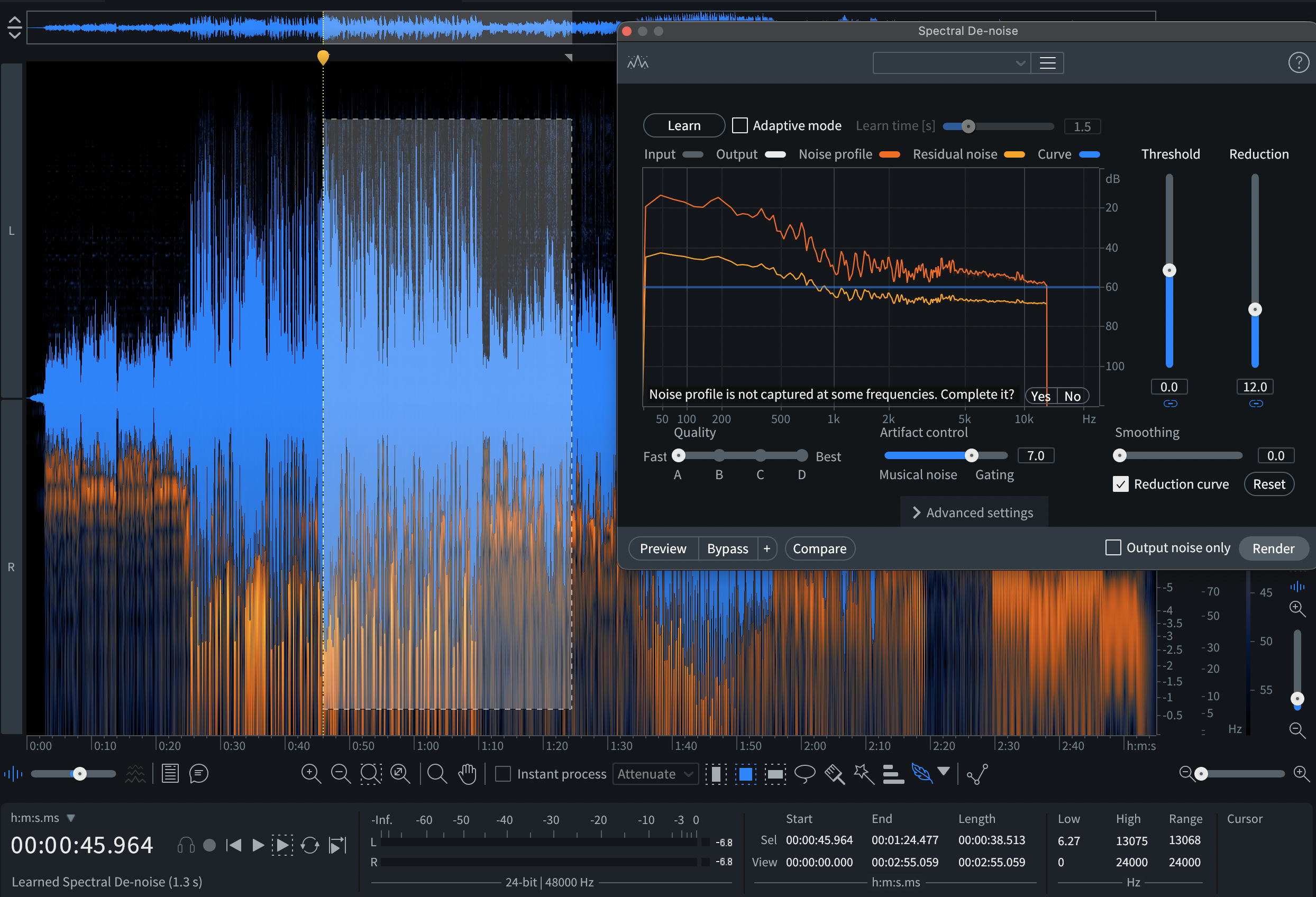
Noise Reduction: Eliminating constant background drones (HVAC, engines) or transient sounds.
Harmonic Analysis: Examining the "fingerprint" of the audio to identify the recording source or detect if the file has been tampered with.
Scientific Validity: The process must be documented so that another expert could replicate the results, ensuring the evidence stands up in court.